Benchmarking Robot Manipulation with the Rubik's Cube
摘要(原文)
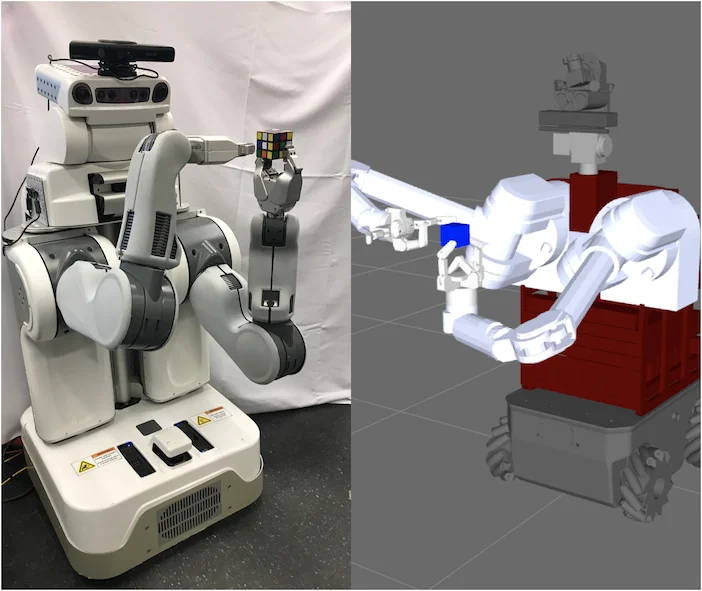
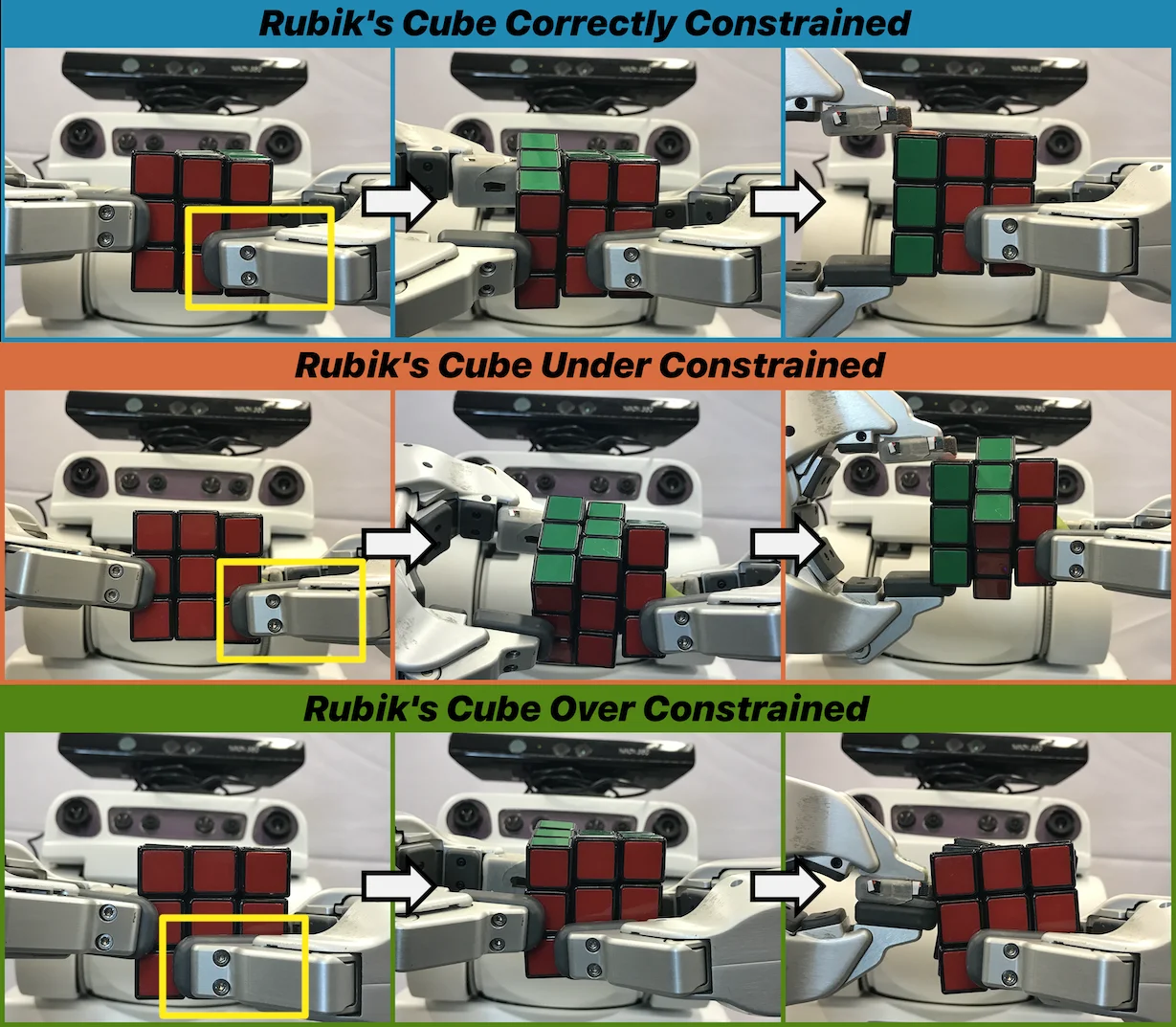
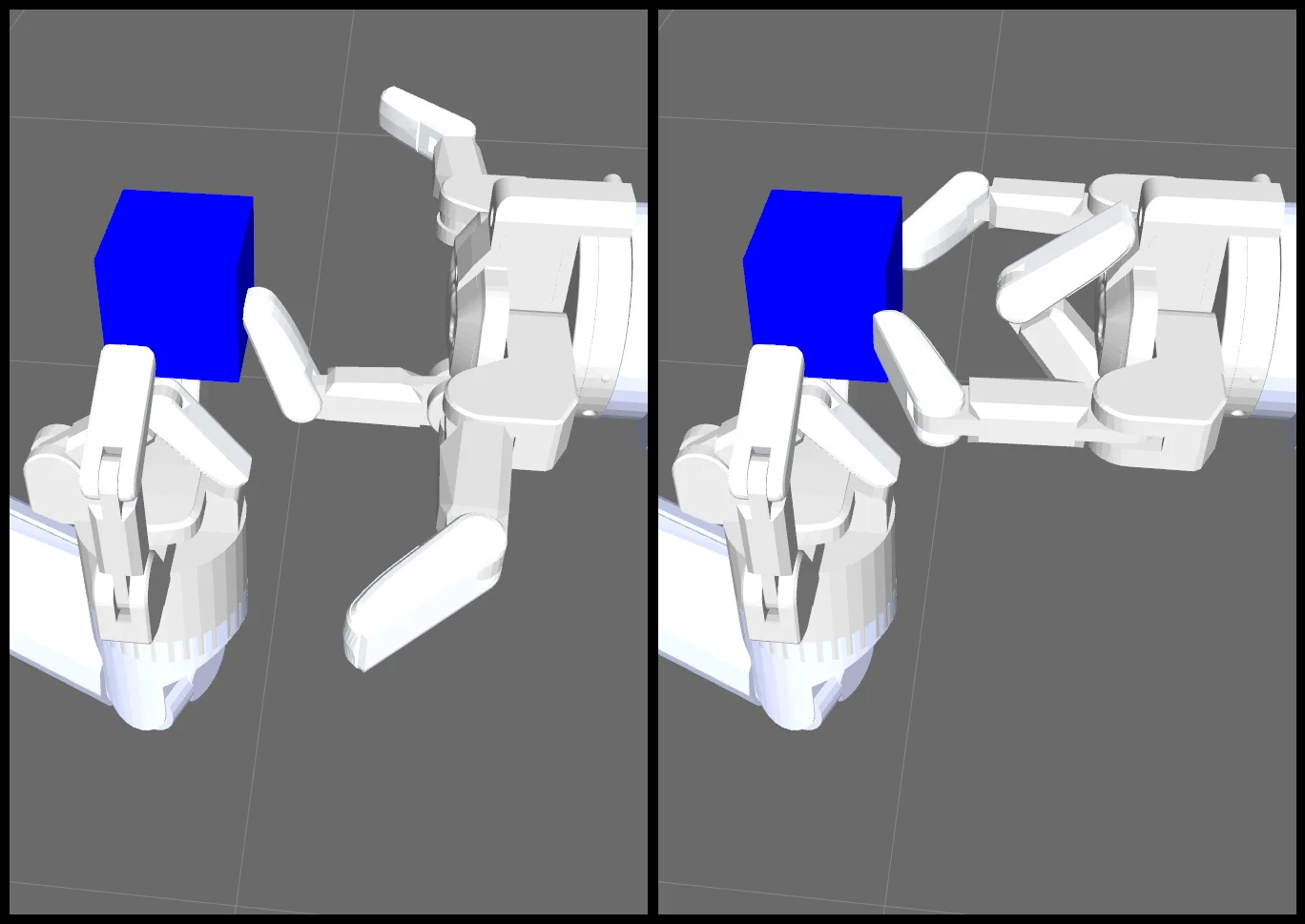
Benchmarks for robot manipulation are crucial to measuring progress in the field, yet there are few benchmarks that demonstrate critical manipulation skills, possess standardized metrics, and can be attempted by a wide array of robot platforms. To address a lack of such benchmarks, we propose Rubik's cube manipulation as a benchmark to measure simultaneous performance of precise manipulation and sequential manipulation. The sub-structure of the Rubik's cube demands precise positioning of the robot's end effectors, while its highly reconfigurable nature enables tasks that require the robot to manage pose uncertainty throughout long sequences of actions. We present a protocol for quantitatively measuring both the accuracy and speed of Rubik's cube manipulation. This protocol can be attempted by any general-purpose manipulator, and only requires a standard 3x3 Rubik's cube and a flat surface upon which the Rubik's cube initially rests (e.g. a table). We demonstrate this protocol for two distinct baseline approaches on a PR2 robot. The first baseline provides a fundamental approach for pose-based Rubik's cube manipulation. The second baseline demonstrates the benchmark's ability to quantify improved performance by the system, particularly that resulting from the integration of pre-touch sensing. To demonstrate the benchmark's applicability to other robot platforms and algorithmic approaches, we present the functional blocks required to enable the HERB robot to manipulate the Rubik's cube via push-grasping.
摘要(中译)
机器人操作基准测试对于衡量该领域的进展至关重要,然而很少有基准测试能够展示关键的操纵技能、拥有标准化指标,并且可以被广泛的机器人平台尝试。为了解决此类基准测试缺乏的问题,我们提出将魔方操作作为一个基准,用以衡量精确操作和顺序操作的同步性能。魔方的子结构要求机器人的末端执行器精确定位,而其高度可重构的特性使得任务需要机器人在一系列长时间动作中管理姿态不确定性。我们提出了一个协议,用于定量测量魔方操作的准确性和速度。任何通用操纵器都可以尝试这个协议,且只需要一个标准的 3x3 魔方和魔方最初放置的平面(例如桌子)。我们在一个 PR2 机器人上展示了针对两种不同基线方法的这个协议。第一个基线提供了一种基于姿态的魔方操作的基本方法。第二个基线展示了该基准测试量化系统性能改进的能力,特别是由触摸前感应集成所带来的改进。为了展示该基准测试对其他机器人平台和算法方法的适用性,我们介绍了使 HERB 机器人能够通过推抓来操作魔方所需的功能模块。
背景剖析
机器人操作技术广泛应用于工业自动化、家庭服务、医疗辅助等领域,核心需求是让机械臂精准完成复杂任务(如组装、分拣或物体操作)。然而,当前领域缺乏一个能同时测试“高精度单步操作”和“长序列任务稳定性”的通用基准——这正是本文要解决的问题。
此前的机器人操作基准(如YCB数据集的Box and Blocks测试)存在两个关键缺陷:要么仅要求机械臂执行简单抓取(无法体现复杂任务能力),要么依赖短步骤任务(无法暴露误差累积问题)。例如,魔方操作需要每步旋转精确到毫米级,同时还要在多次操作中动态调整姿态以应对不确定性——现有基准无法同时满足这两个要求。更棘手的是,机械臂的高自由度导致的校准误差、执行器精度限制,以及环境感知噪声,都会让长序列操作中的微小偏差不断放大,最终导致任务失败。
本文提出的解决方案是:将魔方操作设计为一个综合性基准测试。其核心思路是利用魔方的结构特性(每个面由3×3小方块组成,需协调多个轴的旋转),同时测试机械臂的两种关键能力:1)单步操作的亚毫米级精度(确保每个方块旋转到位);2)长序列任务中的误差补偿能力(通过传感器反馈或算法优化修正姿态偏差)。研究团队为此设计了量化评估协议,只需标准魔方和平面工作台即可测试,且开源了基准实现代码。
该方法与前人工作的关键差异在于:它首次将“静态精度”和“动态鲁棒性”结合为一个可扩展的测试框架。不同于传统基准仅关注单一任务(如抓取或装配),魔方操作要求机械臂在持续交互中自主修正误差——这更接近真实世界中复杂任务的挑战。此外,该基准的简易设置(仅需一个魔方)使其能跨平台测试(从实验室的PR2机器人到商用HERB机器人),而无需定制化硬件。