Cura 1T: Specialized Model for Agentic Healthcare
arXiv · HuggingFace · ▲28
Abstract (verbatim)
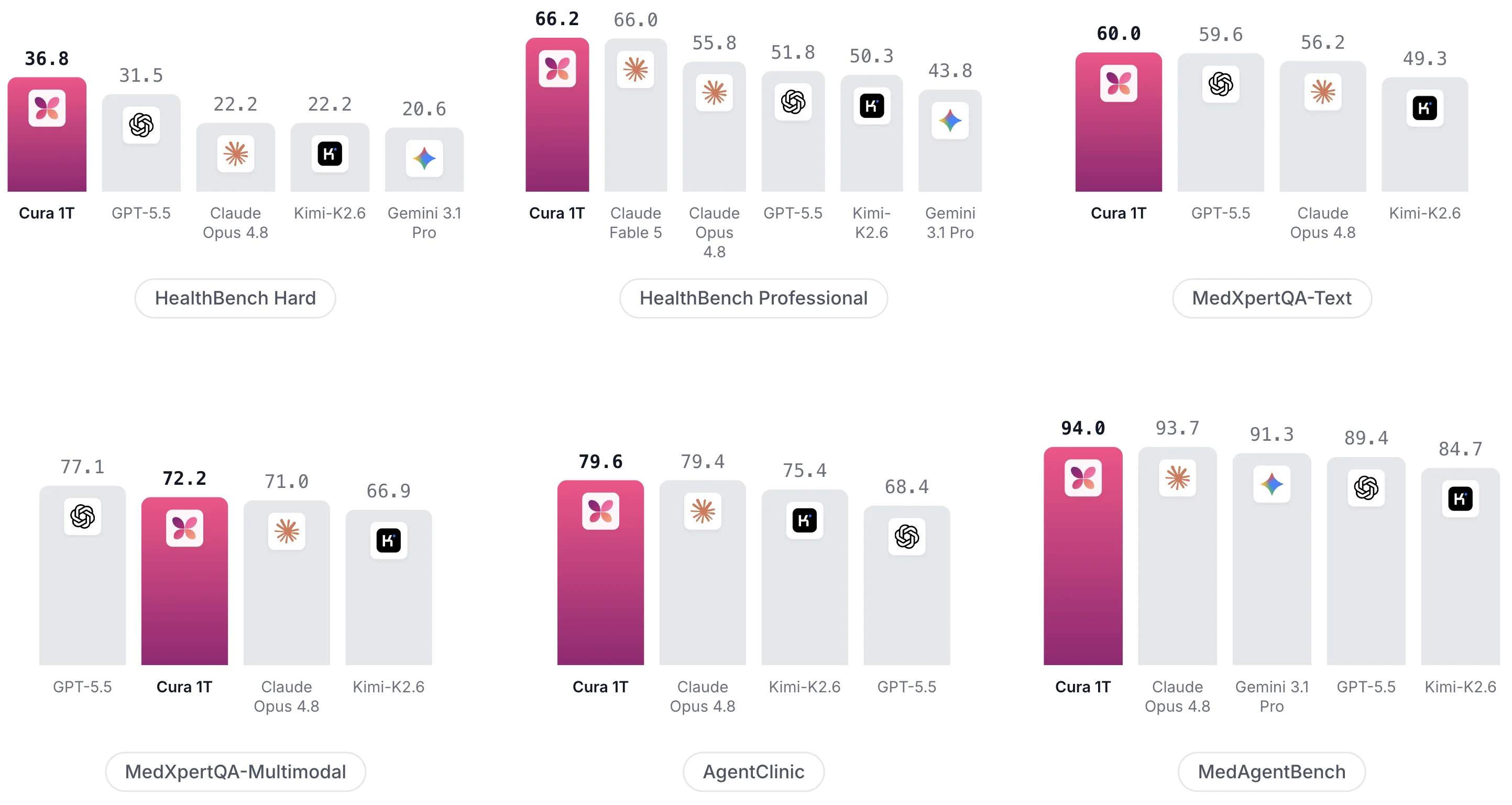
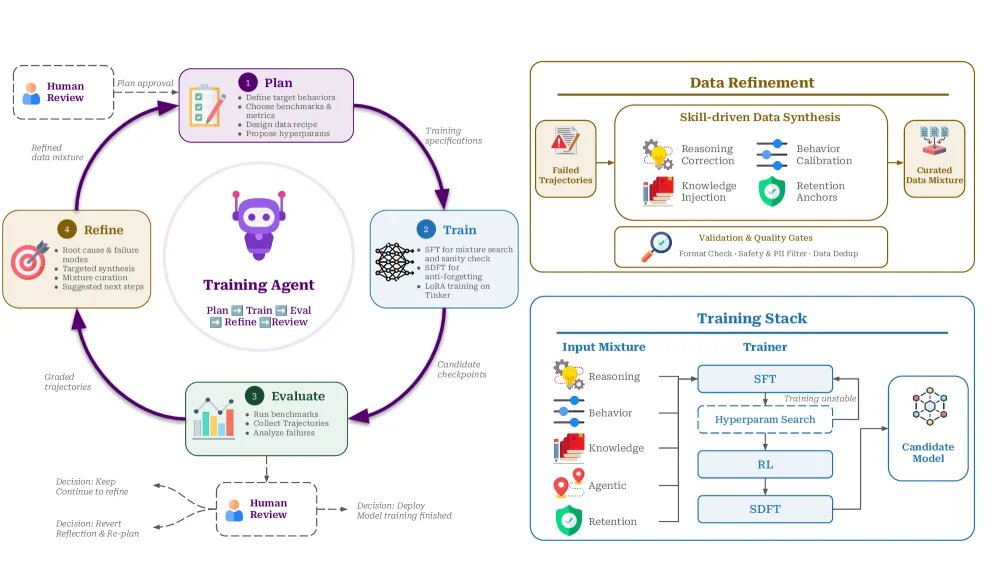
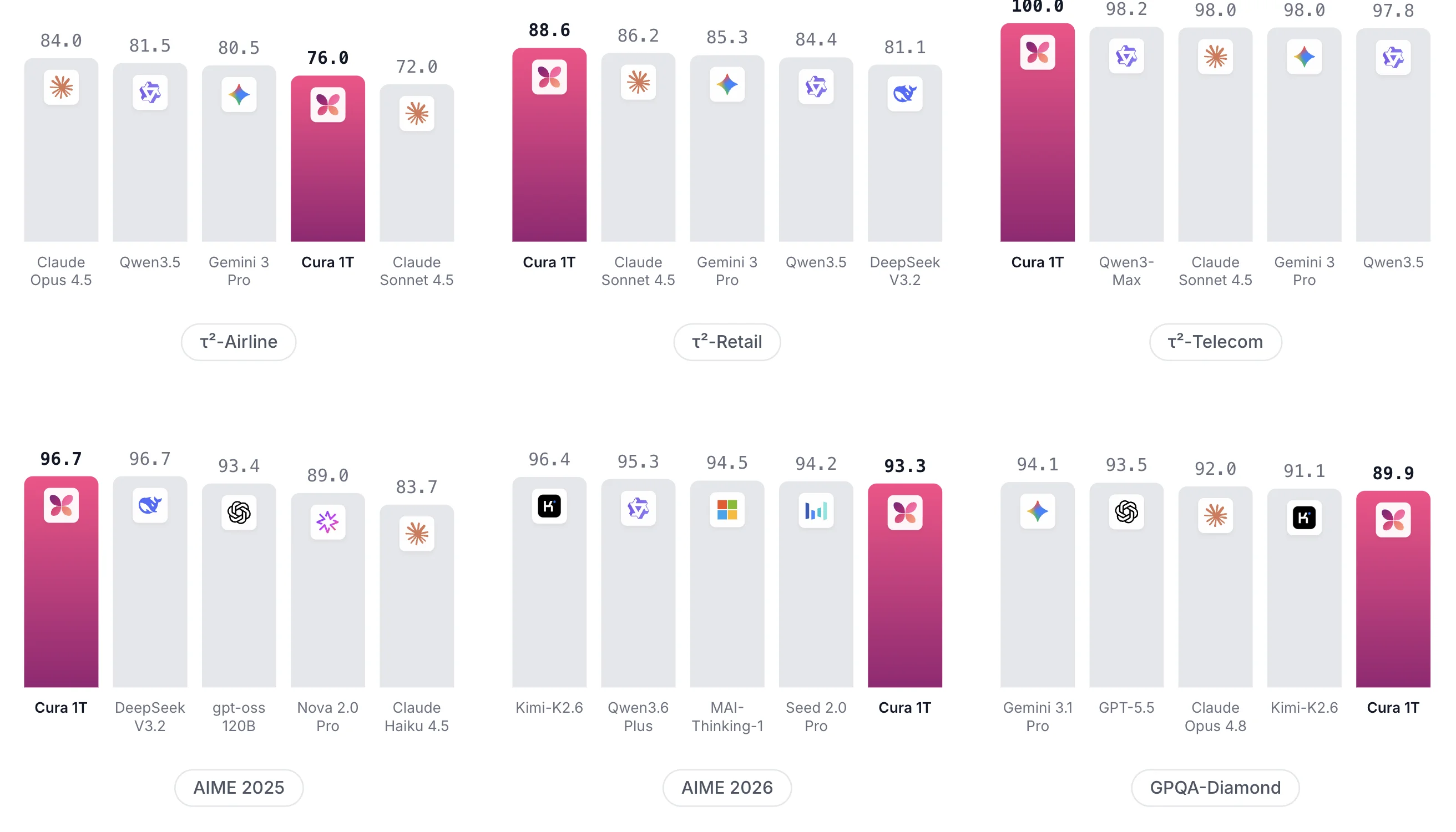
Healthcare spans high-stakes communication, expert reasoning, and workflow execution, yet specialized LLMs that cover these use cases together remain limited. A healthcare model must handle patient consultation, clinical reasoning over text and images, interactive diagnosis, and electronic health record (EHR) tool use. These capabilities fail in different ways, and a narrow update for one task can degrade another. We present Cura 1T, a healthcare-specialized LLM trained through a human-gated self-evolution loop. In each evolution round, a training agent plans a target capability, trains the model, evaluates benchmark trajectories, and refines the data mixture from observed failures. This data-centered loop improves the model through targeted synthetic and curated examples rather than a single generic medical-data update. Across the healthcare evaluation suite, Cura 1T ranks at or near the top among frontier baselines, while remaining competitive on out-of-domain reasoning and agentic benchmarks.
Background
Background Analysis
1. Technical Context and Real-World Needs
Healthcare requires capabilities for high-stakes communication, expert reasoning, and workflow execution, such as adhering to clinical guidelines during patient interactions, analyzing text and images for diagnosis, and using electronic health records (EHR) for long-term care. These scenarios demand models that balance accuracy, consistency, and error avoidance. However, existing models often excel in one task but fail in others, creating gaps in real-world deployment.
2. Previous Limitations
Despite progress in isolated medical tasks (e.g., QA or imaging analysis), three challenges persist:
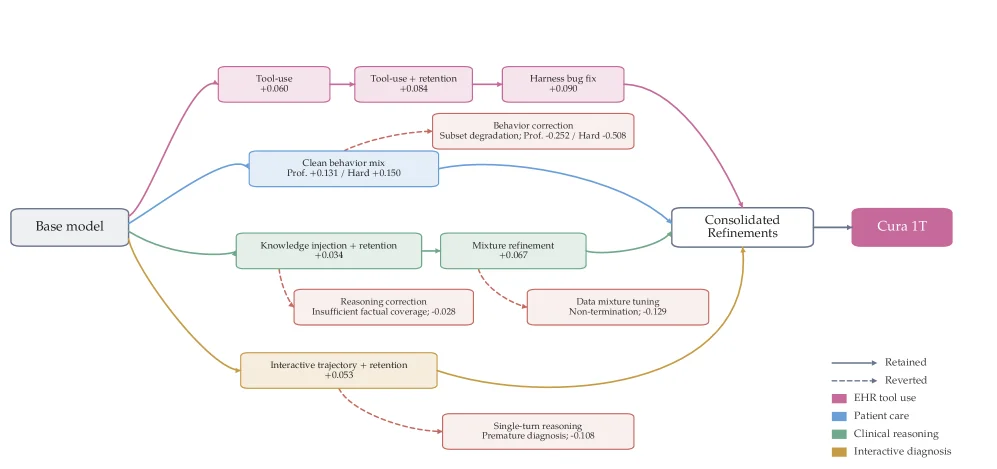
- Task Interference: Optimizing for one task (e.g., diagnosis) may degrade performance in others (e.g., tool usage).
- Data Fragmentation: Medical data is scattered across guidelines, patient records, and images, with limited high-quality supervision (e.g., some outcomes cannot be easily verified).
- Diverse Failure Modes: Different tasks require distinct fixes (e.g., missing information vs. brittle reasoning), making generic updates ineffective.
3. Proposed Solution
The paper introduces Cura 1T, which uses a "human-gated self-evolution loop" to address these issues. An AI agent autonomously plans improvements (e.g., enhancing multi-round diagnosis), trains the model, evaluates results, and refines data based on failures. For example, if the model misses a detail in imaging, the agent adds targeted data instead of overhauling the entire system. This avoids the pitfalls of one-size-fits-all training by iteratively balancing task-specific and general capabilities.
4. Key Differences from Prior Work
Cura 1T stands out by:
- Coordinated Task Optimization: Simultaneously improving patient interaction, clinical reasoning, and EHR tool usage, rather than isolating tasks.
- Automated Iteration: Using an AI agent to analyze failures and generate improvements, reducing manual effort.
- Generalization Preservation: Maintaining strong performance in non-medical benchmarks (e.g., math), proving its training strategy avoids compromising broader capabilities.
This approach positions Cura 1T as a leader in healthcare AI while offering a blueprint for developing "specialized yet generalizable" models.